Mobile crushers now cover everything from compact city-site units to 300+ TPH production plants, so comparing models and prices before buying is essential.
Understanding what a mobile crusher is and where it delivers value
- A mobile crusher is a self-contained crushing plant mounted on tracks or wheels, designed to crush rock, concrete, asphalt, and demolition waste directly on site instead of hauling material to a fixed plant.
- Typical applications include quarrying, sand and gravel production, highway and railway projects, urban demolition, and recycling of construction and demolition waste, where reduced trucking and faster setup save major operating costs.
- Compared with stationary plants, mobile crushers prioritize flexibility, fast relocation, and integrated screening or conveying systems, even if peak capacity can be lower than very large fixed installations.
- Many modern units integrate diesel-electric or hybrid drives, dust suppression, and remote control systems, which can reduce fuel use and improve operator safety in demanding environments.
Main types of mobile crushers and typical work scenarios
- Mobile jaw crushers use a compressive jaw mechanism and are usually selected as primary crushers for hard rock, concrete with rebar, and large feed sizes, handling capacities from about 50 to 300 tons per hour depending on model.
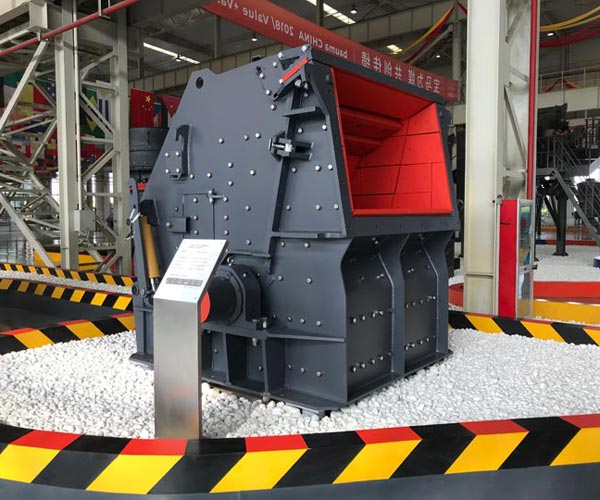
- Mobile impact crushers use high-speed rotors and are preferred for softer to medium-hard materials, asphalt recycling, and projects requiring good cubic shape and adjustable fines content.
- Mobile cone crushers provide secondary or tertiary crushing for medium to high hardness aggregates, often following a mobile jaw unit to produce high-quality final aggregates with controlled gradation.
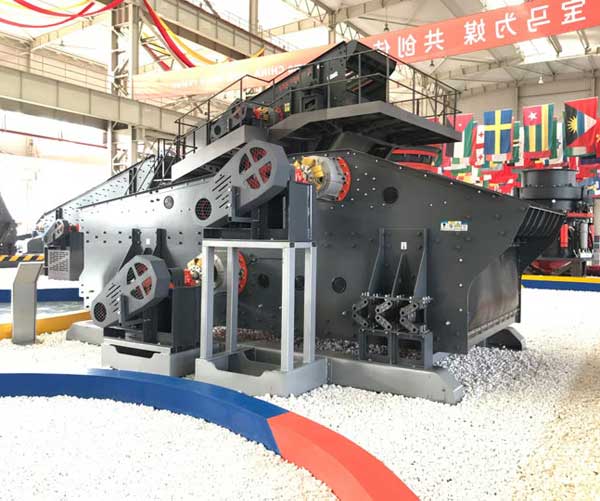
- Many mobile plants combine these crushers with onboard vibrating screens, return conveyors, and magnetic separators, creating “closed circuit” systems that can produce final-spec materials in a single pass.
Track-mounted versus wheel-mounted mobile crusher platforms
- Track-mounted (crawler) mobile crushers offer superior off-road performance, gradient climbing, and precise positioning on rough or muddy sites, which is ideal for quarries, mines, and demolition areas with limited access.
- These tracked units typically cost more due to the heavier chassis, undercarriage, and hydraulic drive systems, but the gain in mobility and reduced need for auxiliary equipment can justify the premium on complex sites.
- Wheel-mounted or tire-type mobile crushers are better suited to paved or semi-prepared ground, where they can be towed between sites or repositioned with a tractor or truck at lower ownership cost.
For contractors working mainly on highways, urban recycling, or regular transfers over longer distances, tire-mounted machines can offer lower initial purchase prices and simpler maintenance of running gear.
Key performance specifications to compare between models
Capacity, often expressed in tons per hour (TPH), is one of the primary specifications, with compact crushers starting around 50–80 TPH and mid-size professional units ranging from roughly 150–300 TPH depending on configuration.
Feed opening size and maximum feed size determine the largest rock or concrete pieces that can be processed without pre-breaking, so larger jaws (for example around 40 × 24 inches on certain tracked jaw models) handle chunkier material more efficiently.
Engine power, often in the 70–250 horsepower range for compact to mid-size machines, should match both capacity and expected working conditions, including altitude, ambient temperature, and duty cycle.
Additional parameters such as operating weight, discharge size adjustment range, and number of screening decks influence transport permits, product quality, and compatibility with downstream equipment like stackers or wash plants.
Popular Models from Leading Manufacturers and Their Specs
everal manufacturers dominate the mobile crusher market, offering models with varying capacities and features.
- Zenith K3 mobile jaw crusher includes a 2200mm x 3200mm hopper and 125 HP engine, designed for heavy-duty tasks.
- Zenith NK is a compact jaw crusher emphasizing versatility and ease of transport for urban sites.
- Zenith offers mobile jaw crushers with capacities from 10 to 650 tons per hour and maximum feed sizes up to 700mm.
- Their mobile cone crushers share similar specs, focusing on secondary crushing with weights between 9.5 and 60 tons.
Price Ranges for Various Mobile Crusher Models Compared
Prices for mobile crushers fluctuate based on type, size, and brand, providing options for different budgets.
Entry-level small mobile jaw crushers, can be acquired through monthly payments around $1,853 to $2,376, indicating an affordable outright cost for compact units.
Zenith K3 mobile jaw crusher is priced at $210,000, offering a balance of power and portability.
General mobile crushers range from $50,000 for basic models to $2,000,000 for high-capacity, advanced units.
Jaw crushers typically start at $10,000 but mobile versions begin higher, around $200,000 for robust models.
Impact crushers in mobile form, such as a hot-selling wheel-mounted model, cost between $115,000 and $125,000.
Cone and impact crushers for larger operations can exceed $1,000,000.
Compact crushers overall fall between $500,000 and $800,000, influenced by options and shipping.
Tips for Buying the Right Mobile Crusher for Your Needs
Selecting a mobile crusher requires careful consideration to match your project requirements.
- Assess the material type and hardness to choose between jaw, impact, or cone.
- Evaluate site conditions for tracked versus wheeled mobility.
- Calculate required capacity based on daily output needs.
- Compare fuel efficiency and maintenance costs for long-term savings.
- Research dealers for financing options, as some offer rentals or leases.
- Read reviews and request demos to ensure compatibility.
Finally, factor in after-sales support, parts availability, and resale value.

 No. 1688, East Gaoke Road,Pudong new district, Shanghai, China
 WhatsApp: