Understanding Mobile Jaw Crushers and Their Growing Market Demand
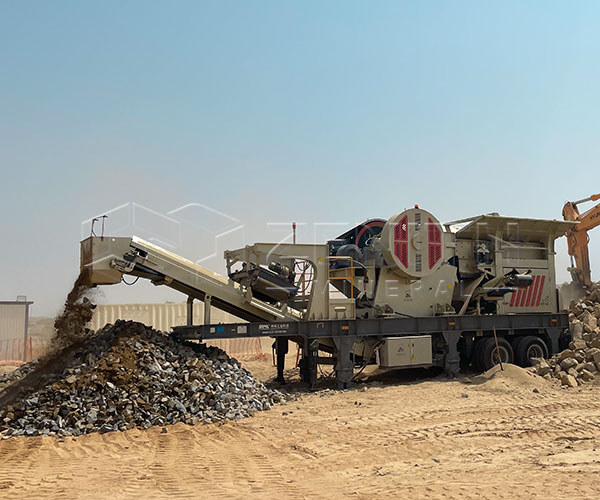
Mobile jaw crushers have become essential equipment in modern quarrying, mining, construction, and recycling industries. These machines combine the robust crushing power of traditional jaw crushers with the flexibility of mobility, allowing operators to process materials directly at the job site.
They eliminate the need for extensive material transportation, reducing costs and time significantly.
Demand has risen due to increasing emphasis on on-site processing, environmental regulations, and project efficiency.
Choosing the right mobile jaw crusher requires careful evaluation of project specifics, as mismatched equipment can lead to higher operational expenses and downtime.
Evaluating Material Characteristics Before Purchasing a Crusher
Material properties directly influence crusher performance and longevity. Hardness, abrasiveness, moisture content, and feed size must align with the machine’s design.
- Hard and abrasive materials like granite, basalt, or quartz demand robust jaw plates and high compressive strength capabilities. Jaw crushers excel here due to their compression-based crushing mechanism.
- Softer or less abrasive materials such as limestone or recycled concrete allow for higher throughput with less wear on components.
- Moisture content affects sticking and flow; some models handle wet materials better with specific chamber designs.
- Feed size is critical—ensure the maximum input dimension fits the crusher’s opening to avoid blockages or inefficiency.
Assessing Required Crushing Capacity and Production Goals
Underestimating needs leads to bottlenecks, while oversizing inflates costs unnecessarily.
- Compact models often deliver 50-150 TPH, suitable for small contractors or demolition projects.
- Mid-range units handle 150-400 TPH, ideal for medium quarries or recycling operations.
- High-capacity quarry models exceed 400-800+ TPH for large-scale mining or aggregate production.
Production goals should include daily/weekly targets and future scalability.
Analyzing Mobility Features and Site Adaptability Options
Mobility defines the advantage of these machines. Track-mounted or wheeled designs offer different benefits depending on terrain and relocation frequency.
- Tracked models provide superior stability on rough or uneven ground, common in quarries and remote mining sites.
- Wheeled or tire-mounted units suit smoother surfaces and faster highway transport but may require permits for oversized loads.
- Compact designs minimize transport dimensions, easing movement between urban or constrained sites.
Site conditions matter immensely.
- Evaluate ground bearing pressure to avoid sinking in soft soil.
- Consider setup time—hydraulically folding hoppers and conveyors speed deployment.
- Frequent movers benefit from self-propelled systems that reduce labor and equipment needs.
In recycling or construction, high mobility can cut transport costs by up to 30-70% compared to stationary plants. Always match the undercarriage to your operational environment for optimal performance and safety.
Understanding Different Types of Mobile Jaw Crushers Available
Mobile jaw crushers vary in design to suit applications. Primary distinctions include size, mounting, and configuration.
- Compact/mini models: Ideal for small sites, tight spaces, or rental fleets; lower capacity but highly portable.
- Contractor-class units: Balance size and output for medium projects in construction or demolition.
- Full quarry/production models: Heavy-duty for high-volume hard rock processing with larger hoppers and conveyors.
Tracked versus portable distinctions add another layer.
- Tracked versions emphasize on-site maneuverability.
- Some integrate screens or magnets for single-pass processing.
- Jaw crushers generally suit primary crushing of large, hard feeds. They produce reliable results but may yield irregular shapes compared to impact or cone types. Consider combining with secondary units for complete plants.
Calculating Costs Including Purchase Price and Ownership Expenses
Pricing for mobile jaw crushers spans a wide range, influenced by size, features, and new/used status.
- Compact models start around $150,000-$350,000.
- Mid-range options fall between $450,000-$750,000.
- Large quarry units can exceed $800,000-$1,500,000+.
Beyond purchase price, evaluate total ownership costs.
- Fuel, wear parts (jaw plates, liners), and maintenance accumulate quickly.
- Downtime costs from frequent repairs can erode profits.
- Mobility often offsets higher initial costs through reduced hauling expenses.
Making the Final Decision and Best Practices for Buying
Consult experts or conduct site trials when possible.
Best practices include:
- Budget for ancillary equipment like screens or conveyors.
- Plan for operator training and spare parts inventory.
- Evaluate scalability for future projects.
A well-chosen mobile jaw crusher boosts efficiency, cuts costs, and enhances competitiveness. Take time to align specifications with operational realities.
 No. 1688, East Gaoke Road,Pudong new district, Shanghai, China
 WhatsApp: